
Topical Uses of Nettle: 3 recipes
Table of Contents
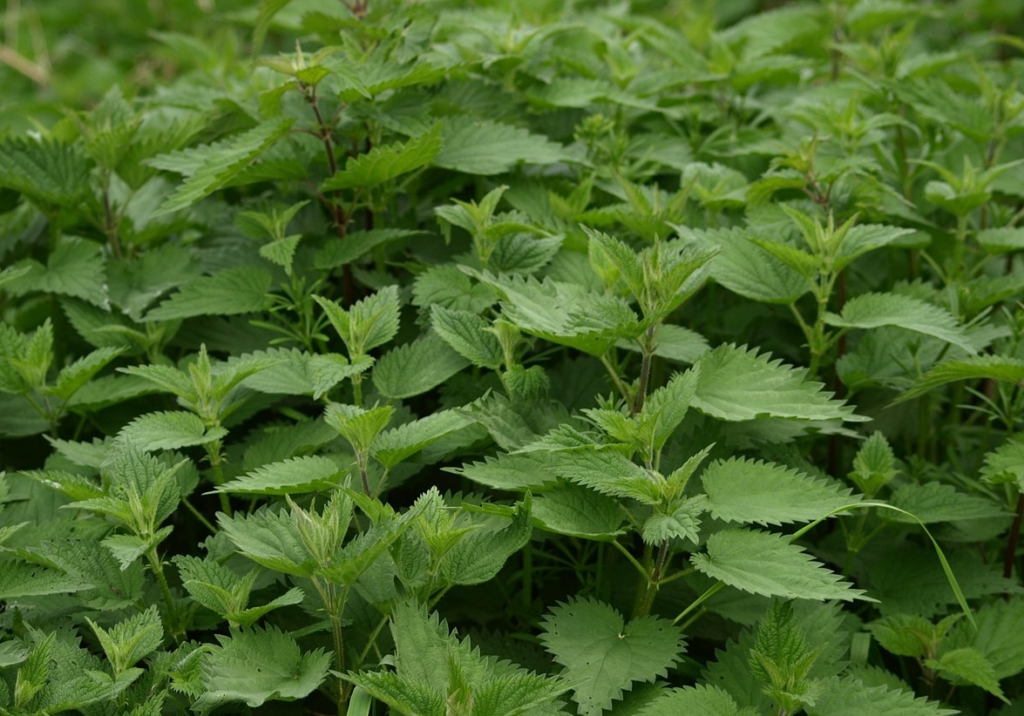
Stinging nettle (Urtica dioica) planted itself in my garden between a small fir, a compost pit, and a rhubarb bush, and it has been slowly and politely spreading and thriving ever since. It’s my favorite weed. I love the smell of it. It makes a great fertilizer.
Although there are many folk tips claiming that taking small doses of tincture can help the immune system, cure digestive issues, or reduce allergies, I have not personally tried that. I do add leaves to meals—from soups to salads—but my curiosity here is specifically about hair and arthritis. Here, I want to share some of the topical (external) uses of nettle.
Why Would You Rub Stinging Nettle on Yourself?
Nettle contains compounds like silica, iron, and flavonoids that are believed to strengthen hair follicles. There are no large, widespread clinical studies proving that nettle leaf extracts stimulate hair growth, but some limited studies suggest it may help elongate the hair shaft and enhance growth.
Flavonoids, phenolic acids, and certain proteins can reduce local inflammation, which may help people with arthritis. For centuries, people have applied nettle compresses to inflamed body parts to alleviate pain. Nettle also contains magnesium, and magnesium creams are sometimes used to promote relaxation and sleep.
Anyway, let’s dive in.
Growing Nettle
To begin with, I wouldn’t plant it in the middle of the garden, because it does like to spread. Not as aggressively as some weeds, but it still needs space. Plus, it stings—so why plant it where you walk often?
Nettle prefers partial shade, good soil, and slightly moist ground. A quiet, infrequently visited spot—like mine near a compost pit—is ideal. If your soil isn’t great, mulch or add compost from time to time.
It can be grown from seeds, but you can also dig up a root with shoots and transplant it—it will spread.
Harvesting Nettle
Harvest in spring or early summer when the leaves are young, the plants are about 20–40 cm tall, and before flowers appear. Stop harvesting once nettles flower; leaves after flowering accumulate more calcium carbonate, which can be irritating to the urinary tract. This mostly applies to internal use, but for general safety, I use fresh leaves for everything.
How to Make Nettle Tincture and Nettle-Infused Oil
- Harvest just enough to loosely fill your container (use gloves—it stings!).
- Wash nettle under cold water to remove dirt and leave to dry on a kitchen towel or rack. Excess water can cause mold.
- Chop or rip the leaves slightly to release juices.
- Fill the jars loosely with nettle leaves.
- Tincture: Cover with alcohol that is at least 40–60% ABV (I used vodka).
- Oil infusion: Cover with oil suitable for skin. I used olive oil because it’s lightweight and handy, but jojoba oil is excellent for sensitive skin and hair. Make sure the leaves are fully submerged unlike on this picture of mine. (I’m pretty sure I fixed that mistake after taking the picture).
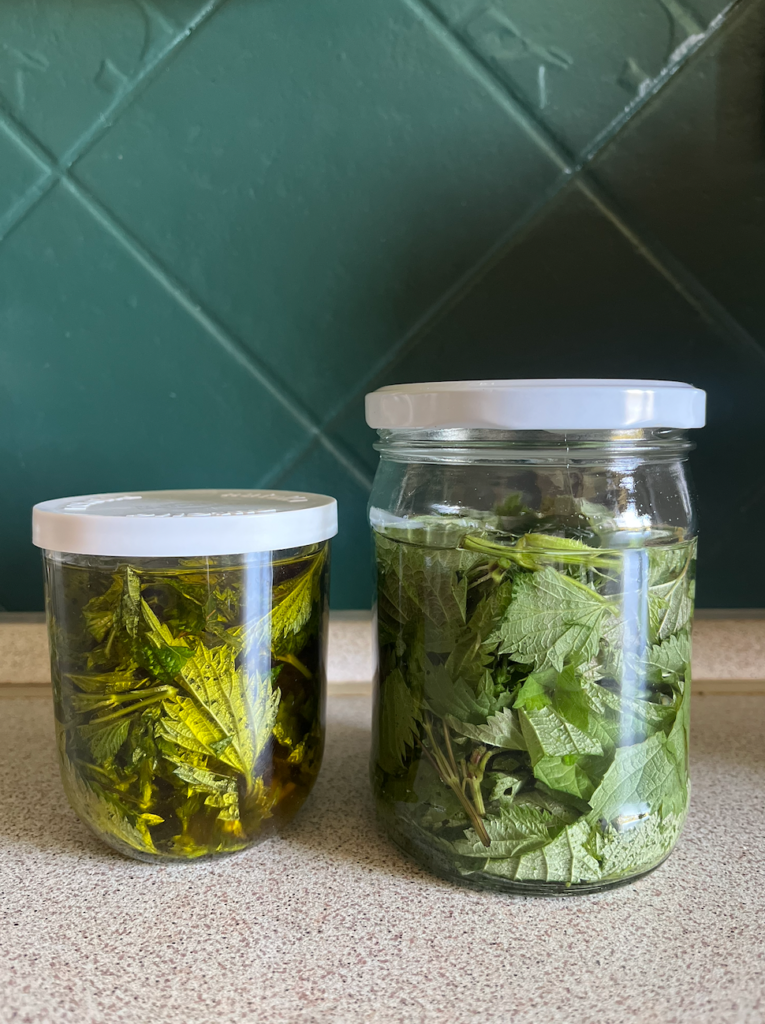
Seal and place the jars in a cool, dark place, shaking occasionally.
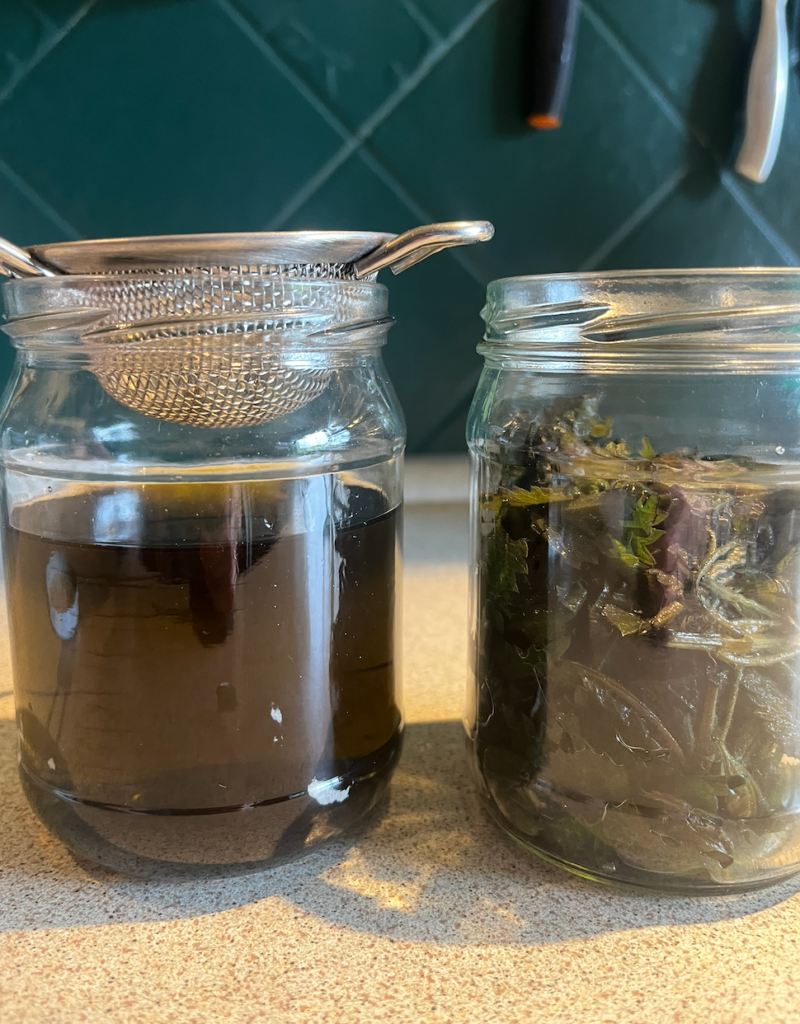
After 4–6 weeks, strain the liquid and transfer it to a dark glass container for storage.
How to Use the Tincture
- For hair: Dilute about 1 part tincture to 3–5 parts water, as alcohol can dry the scalp. Apply to the scalp only and rinse after ~20 minutes. Some people use it undiluted for oily scalp, but I found it too drying. Personally, I prefer the oil infusion for hair.
- For arthritis pain: sadly I did not get the chance to try it out yet. I left to travel and left the jar along with some other stuff in my mom’s place. She thought it was some “weird liquid” and threw it away. My bad for not labelling it, it does look and smell pretty weird.
How to Use the Oil Infusion
You can use it alone or add it to beauty recipes. Apply small amounts with a dropper and massage it into your hair or skin. If you dislike oil in your hair, apply 30 minutes before showering, once or twice a week.
How to Make a Nettle Hair Rinse
Ingredients:
- 1–2 cups fresh nettle leaves (or ¼–½ cup dried)
- 4 cups water
- Optional: a few drops of essential oils (rosemary or lavender) for fragrance
Instructions:
- Boil the water and pour it over the leaves.
- Cover and steep for 30 minutes.
- Strain and cool (compost the leaves).
Usage:
After shampooing, rinse your hair with the nettle tea. You can leave it in or rinse it out after a while if your scalp is sensitive.