
10 March Garden To Do List items in Zone 5
Table of Contents
This will probably depend on the zone you live in, but I will publish a monthly to-do list for Zone 5, and I imagine it will look roughly the same unless, of course, you live somewhere like New Zealand.
It differs year to year, but it’s useful to have a reminder at hand.
It comes especially handy in March, because as snow melts and the sun comes out, your hands start to itch to put something in the ground when, mostly, it’s a bit too early for everything.
Everything but these!
1. Sharpen the Tools
Clean and sharpen the tools.
Sooo, this is what neglect looks like:
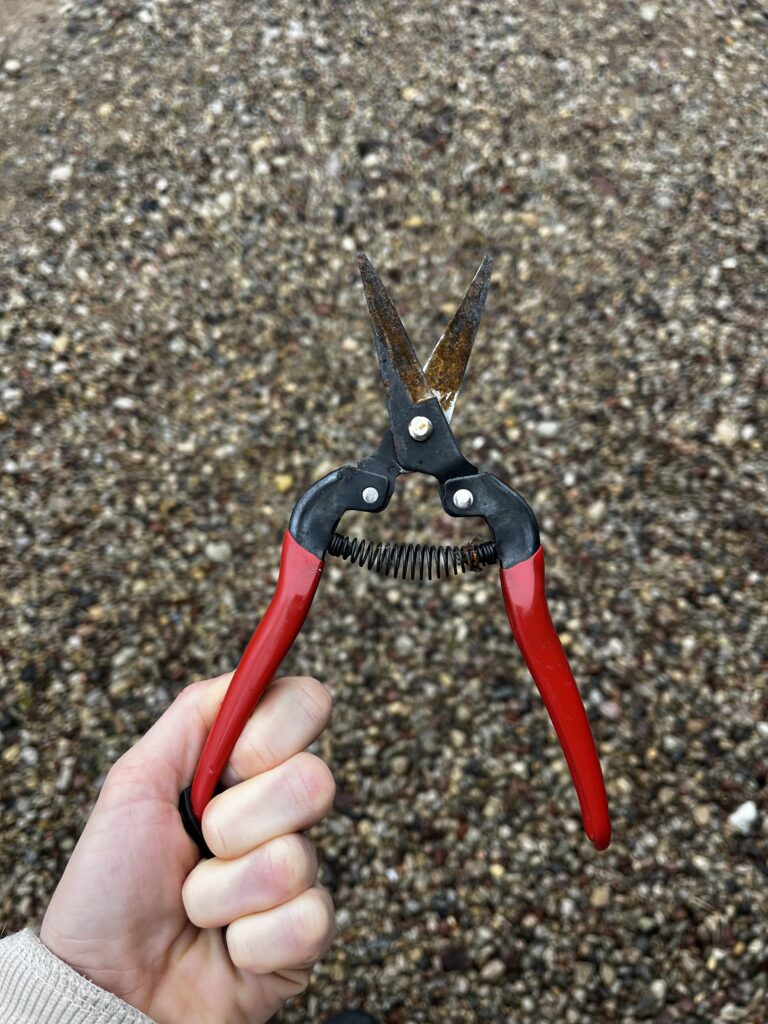
I was going to clean and sharpen them, then I put them somewhere in the grass and forgot them. The lay in the snow until they were discovered just recently. Learn from my mistakes. Don’t forget your tools on the ground.
Get them ready for the season. That leads me to the second to-do item.
2. Prune
Late winter and early spring are the perfect time for pruning some of the trees.
In general, this time is good for pruning fruit trees like apples and pears, hardy shrubs like gooseberries and currants, and deciduous or ornamental trees like birches, maples, and oaks.
Wait until daytime temperatures reach around 0-5°C (32-41°F) and nighttime temperatures are not lower than an occasional -5°C (23°F), while the buds are still dormant.
Avoid pruning lilacs, forsythias, and any plant that blooms on last year’s wood or blooms early in the spring. Prune them once they are done blooming.
A note on cutting trees: not sure what your country’s rules are, but here, if you want to cut a tree down completely, you should do it in early March, before birds start to nest.
3. Clean Rain Water Systems
Remove debris from gutters and drainage holes, clean filters, and wash rain collection barrels so they are ready to catch that first rain.
4. Refresh Paths
Rake and level gravel paths, top them up if needed, and reposition any stepping stones that have shifted over winter. Remove moss or algae if it’s built up, and add a fresh layer of mulch or wood chips where needed.
5. Repair Garden Beds
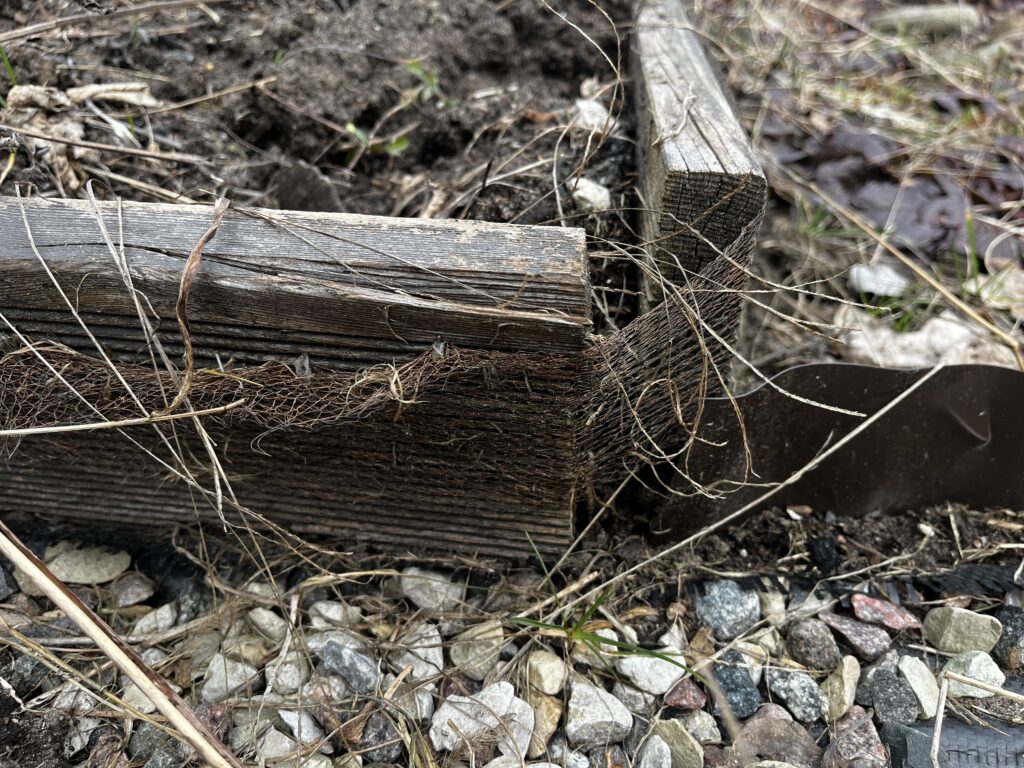
If yours are like mine, made with random scrap wood—this part is something you do every year. Then they break by next year, and you re-stick them together. As long as it works, right?
If you are wondering what that wire is – it’s a copper wire I stapled around some of the beds to test if it would help against a gazillion slugs that compete with me for my crop. Result – it did help a little bit. The persistent slugs did get my greens though.
6. Wash the Greenhouse
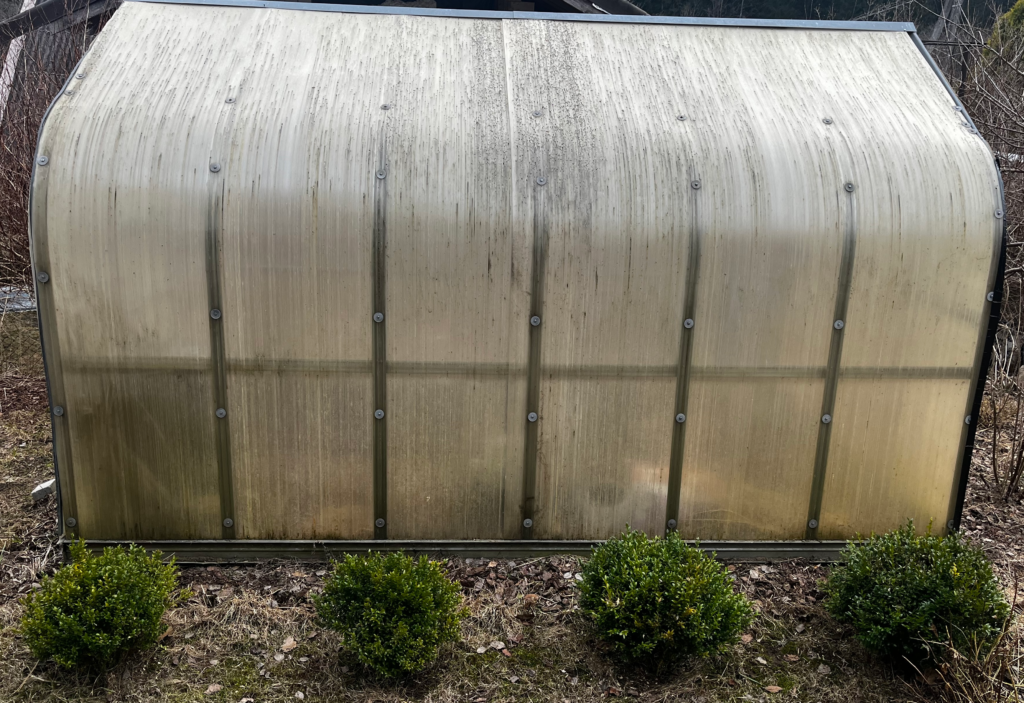
Or if it looks like this beautiful greenhouse of mine—probably redo the whole damn thing altogether. What you see here in this picture is eroding polycarbonate sheets. They get damaged over time from UV light, become brittle, and develop a green/black tinge. Some of it could also be algae or mold, but that would wash away, and in this case it doesn’t.
The good thing—polycarbonate can be replaced, but unfortunately it’s not in my budget this year. As long as light gets in, my tomatoes should be fine. It may yield less fruit, because less light gets in, but the condition itself is not a health hazard. At least that’s what I heard. Yikes. To be fair, it looked exactly like this last year and I’m the living proof it’s ok for your tomatoes to get some green sunlight. It’s a “green”…..house….
7. Tidy up the Garden
As soon as the snow goes and you see all that messy, sometimes moldy grass, dry leaves from autumn, and just general springtime chaos, you want to grab a rake and comb it all to perfection. But wait!
Important thing about raking—wait until later in the spring. Bugs overwinter under leaves, in sticks and stones, and all sorts of debris. Wait until they wake up and start flying around before you rake.
Then clean up your garden beds and comb that garden to perfection.
You can also cut all the grasses you’ve kept for the winter, like Miscanthus sinensis.
8. Add Compost to Beds
Once your beds are tidy, add compost. Just spread it evenly on top and let the rain do the job.
I used to dig them and churn the earth over, but I learned this was a bad practice, since it disturbs the networks that run underground and are used to transport nutrients. Tilling contributes to soil erosion. More about soil erosion here.
9. Start Some Plants Indoors
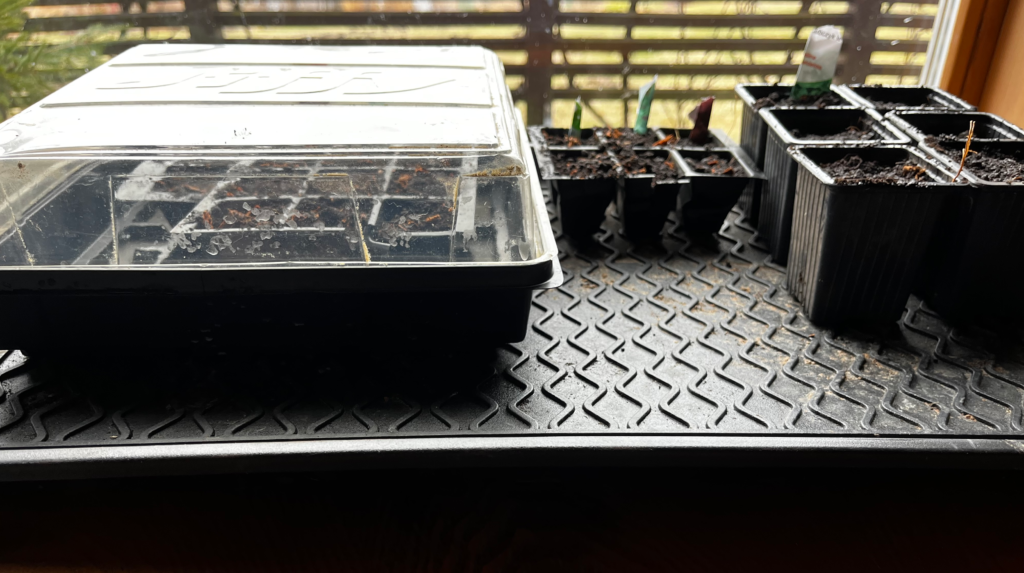
If you are planning to have tomatoes, peppers, eggplant, broccoli, cabbage, and cauliflower, you can start them indoors towards the end of the month. Usually, you should start peppers and eggplant about 8–10 weeks before transplanting, tomatoes 6–8 weeks, and broccoli, cabbage, and cauliflower 4–6 weeks before transplanting. That depends on your local temperatures.
Here, you can usually try planting more hardy plants at the end of April, but I’d wait with tomatoes until May (when I am 100% sure there won’t be frost).
10. Bonus Garden To Do List Item For Those Living Close to a River
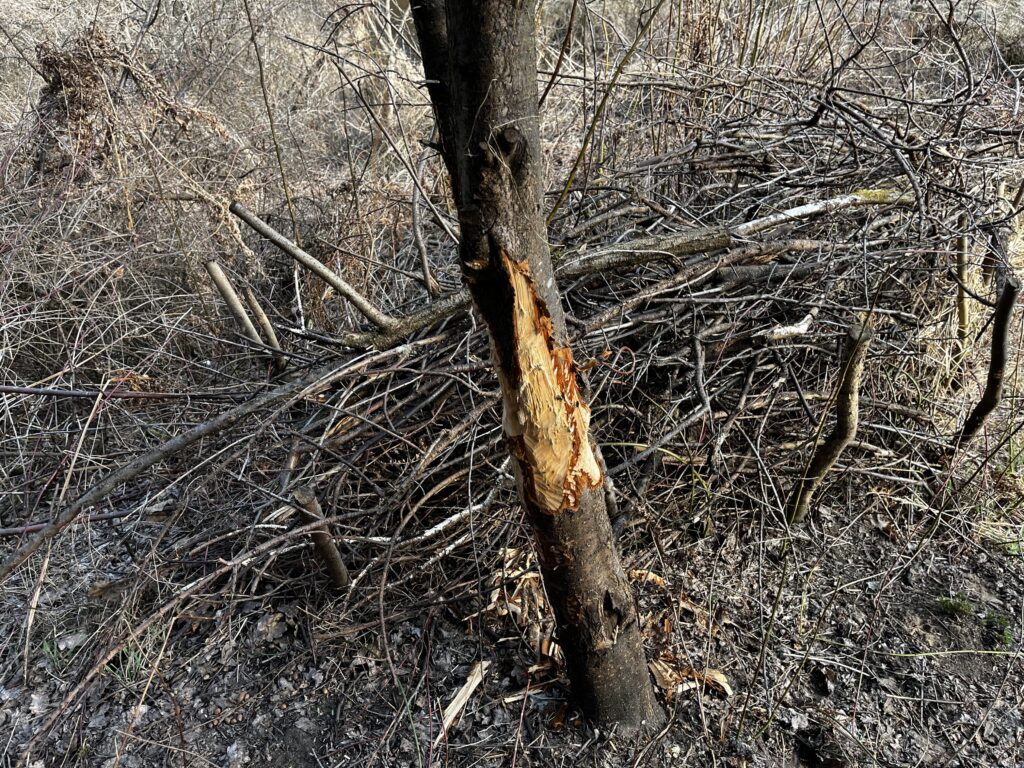
Repair your fences.
Looks like The Bober that lives in the river below my garden woke up and got to work…
See you in April!