I Broke the #1 Seed Starting Rule. Here’s What Happened.
Do Tomato Seedlings Really Need a Cover to Germinate?
You know those rules that you tend to follow but have no idea why? They seem to just be part of the process and nobody questions them, because they’ve been there forever. Well, I’m the one who does question. And I can read the reasoning behind it online, but most of the time I’m just curious about what would happen if I didn’t follow that rule.
One of those is covering your seeds for germination.
The tradition has been that you put the little seed into the little pot full of soil, water it, cover it, leave a little vent for airflow, then place it in a sunny spot. The cover will keep the soil and environment humid and warm and prevent drying out.
I decided to test this theory. On March 20th I planted 9 seeds of Black Cherry Tomato. I covered 7 out of those 9 and left 2 uncovered.
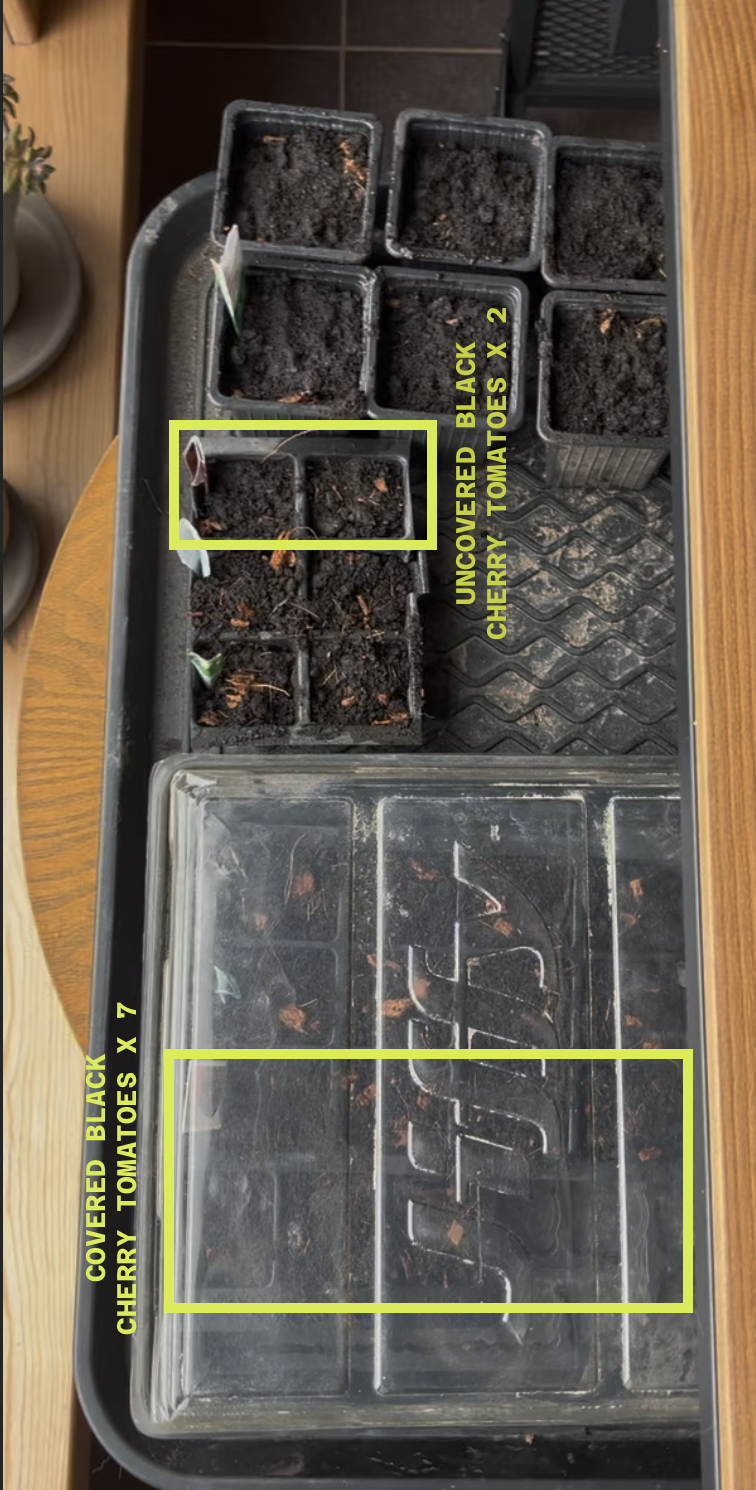
After a week, on March 27th, the covered batch had all 7 seedlings sprouted. The uncovered 2 were still nowhere to be seen.
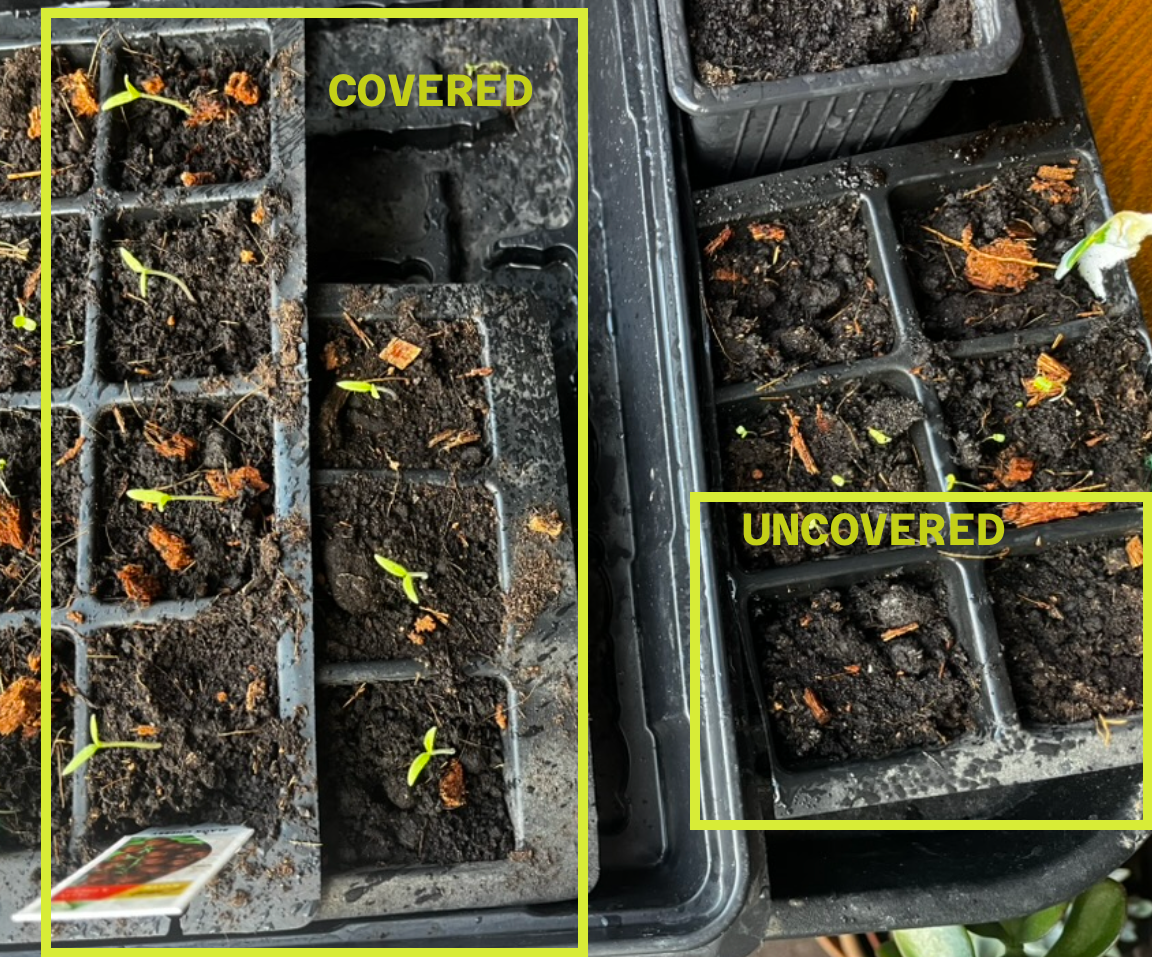
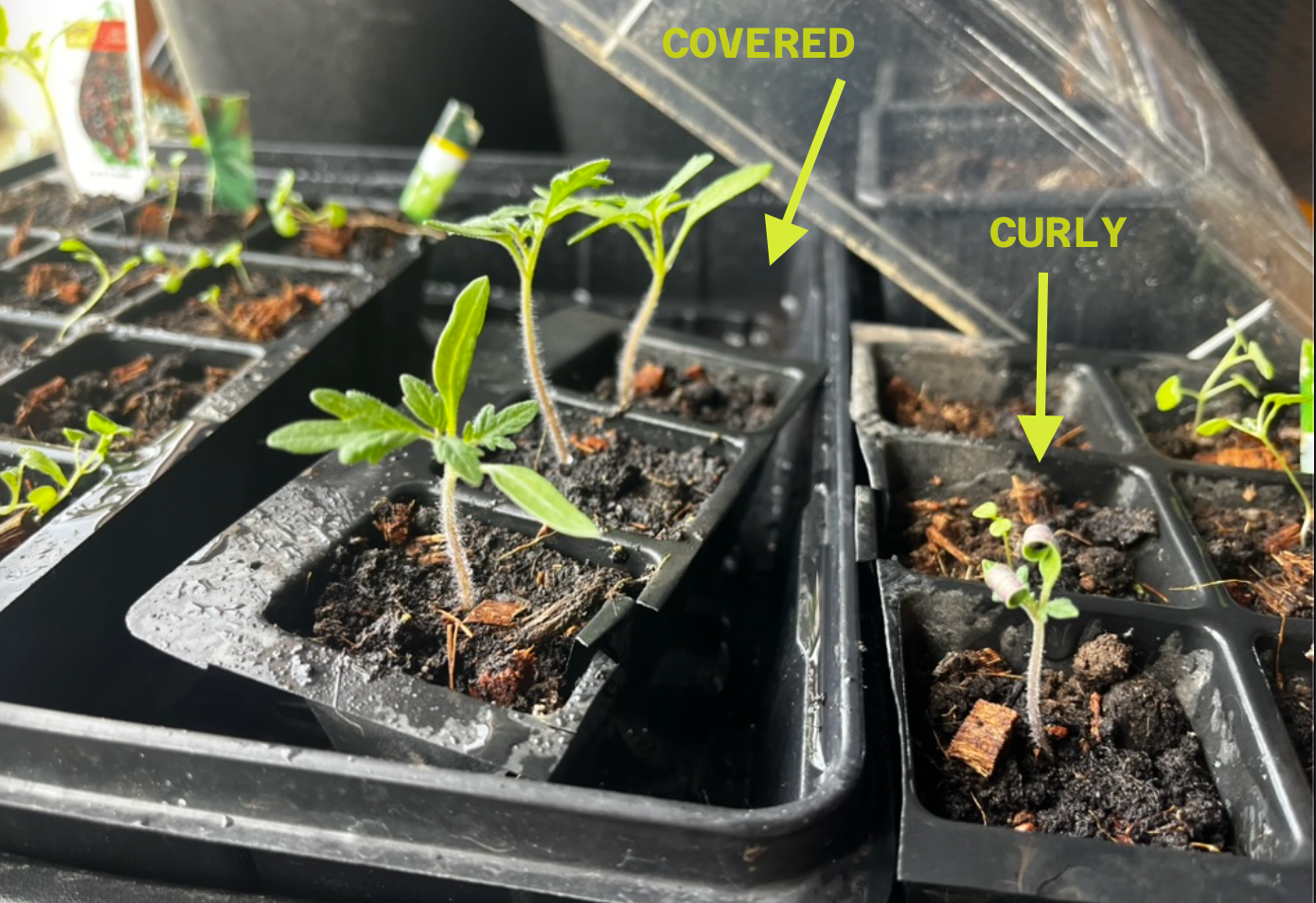
Eventually, after 3 more days, one of the 2 uncovered showed up. In this picture below you can see the size difference between the covered and the uncovered ones.
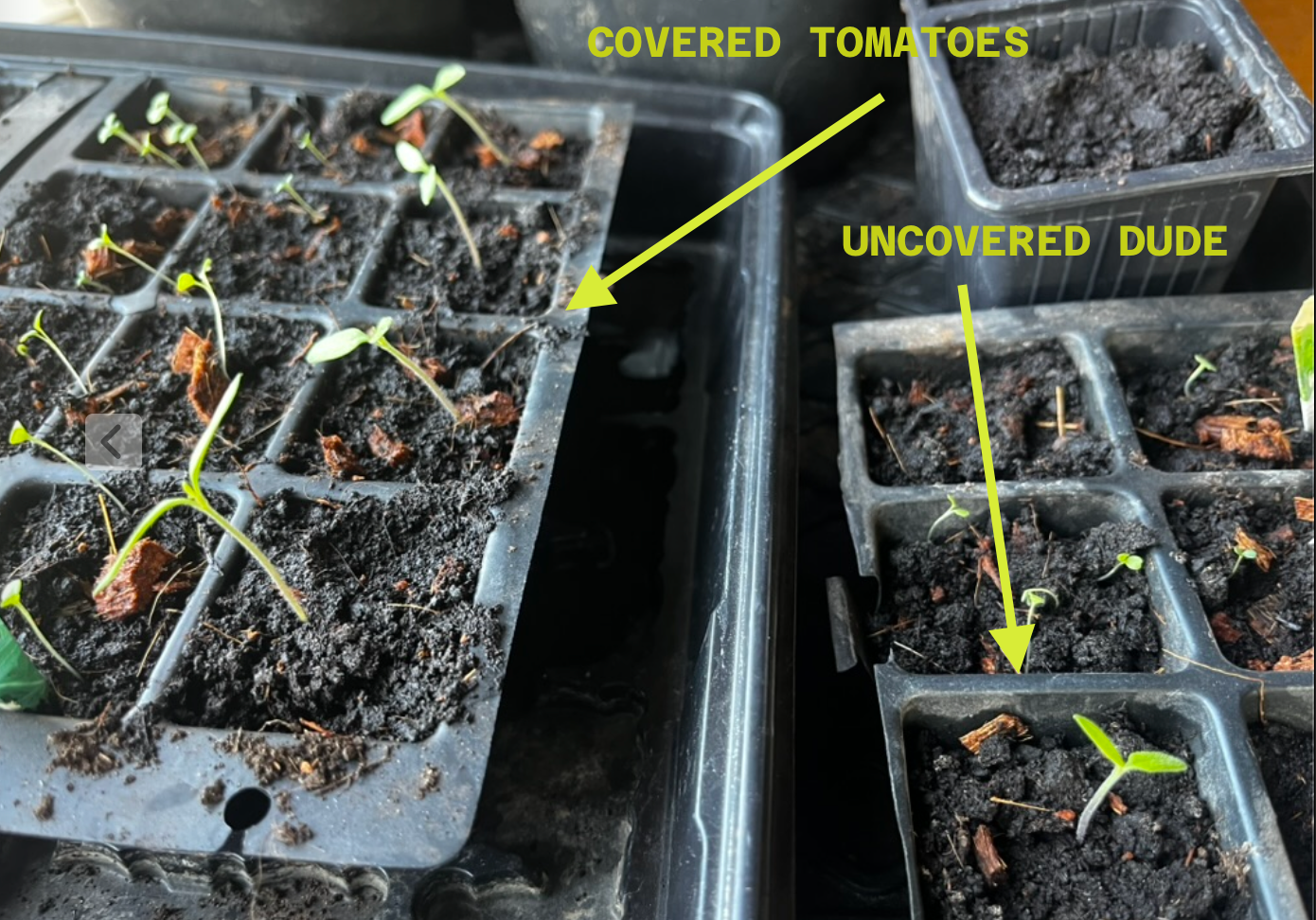
Later, you could clearly see how susceptible the little uncovered seedling was to drying out. In this picture, made on April 9, 20 days after planting you can see that the covered batch already has second pair of leaves. The uncovered guy is starting to develop the second pair, but the first leaves curled up from lack of humidity. I stopped covering them sometime around when they started growing those real leaves. Growing those real leaves is a good time to transplant them into bigger pots, so I did and the little uncovered guy uncurled a little. The second uncovered tomato never sprouted.
You can see in this picture below how visibly smaller the uncovered tomato is compared to its pals.
If the weather was good, I would open a window to let wind in and move them. It’s a pretty known fact that a plant that grows in the wind, puts more effort into hardening its trunk, so it doesn’t break. In a book “Light Eaters” by Zoë Schlanger, I read that a similar thing happens when you touch plants regularly. It causes them stress so they grow smaller but “hardier”. Some people put fans close to their tomato plants to imitate the wind, but that was a bit too much effort for me, so I used the window. Eventually, I started taking my tomatoes outside for a couple of hours daily to get them used to the “real world”.
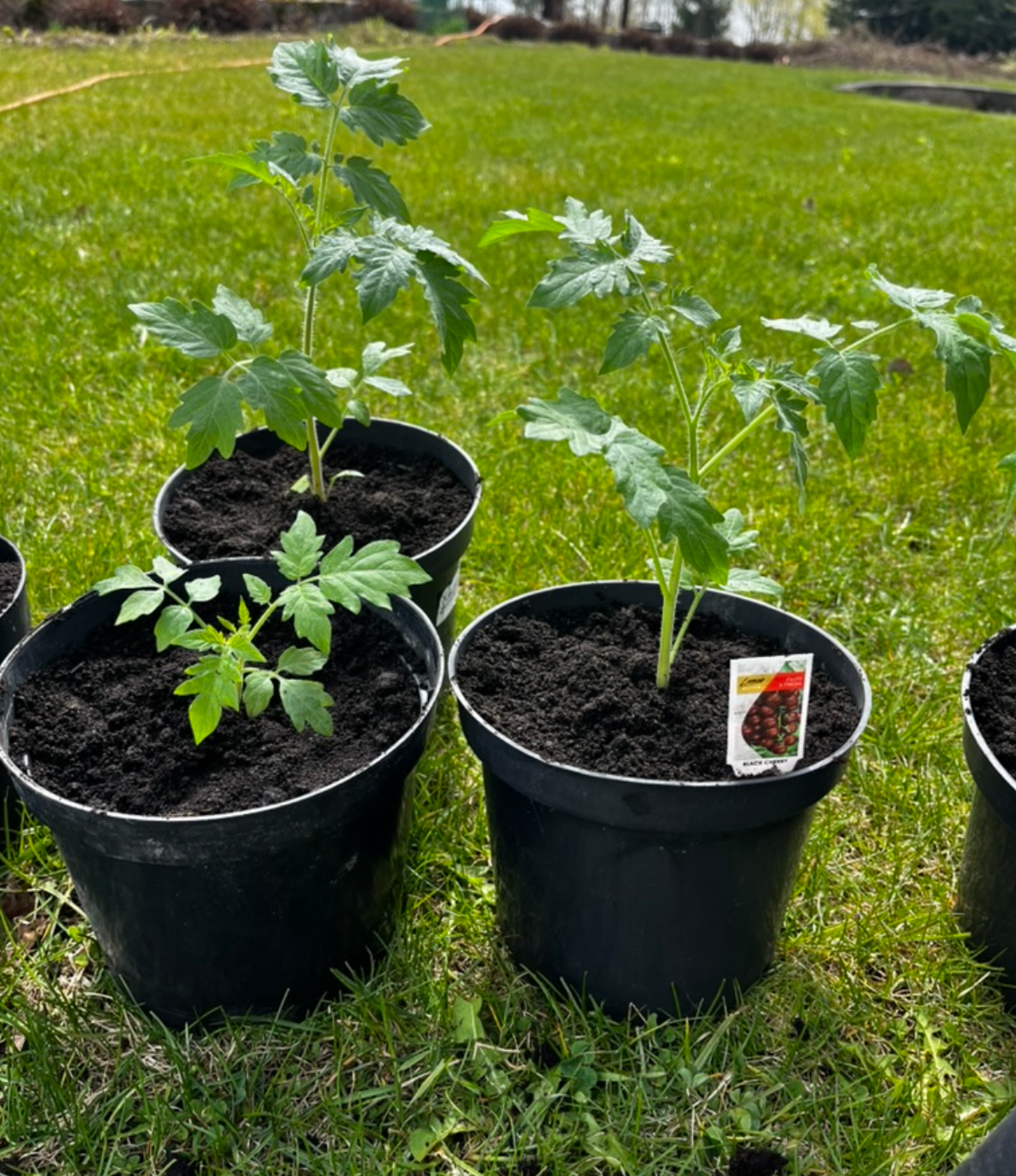
On May 1st, I transplanted them to even bigger pots, since it would be another 2-3 weeks before I could safely move them to the greenhouse. The covered batch all had roots all the way down to the bottom of the pot – nice, white, healthy root system. Then I took out the little one. It almost scared me a little. I expected more roots but the pot just fell out and in my hand was a little rootball, that has only managed to take up roughly half the pots space. I replanted him anyway, and here is a picture of the little uncovered tomato with its covered peers. As you can see, the uncovered tomato is visibly smaller, as if late by at least a week.
When transplanting I made sure to bury their stems all the way up to the leaves, to prevent them from getting too leggy (all those little white hairs just turn to roots when buried), but they started getting tall anyway, so on May 12th I decided it was time to move them to my greenhouse. I gave one tomato away, but kept the little one to continue my experiment.
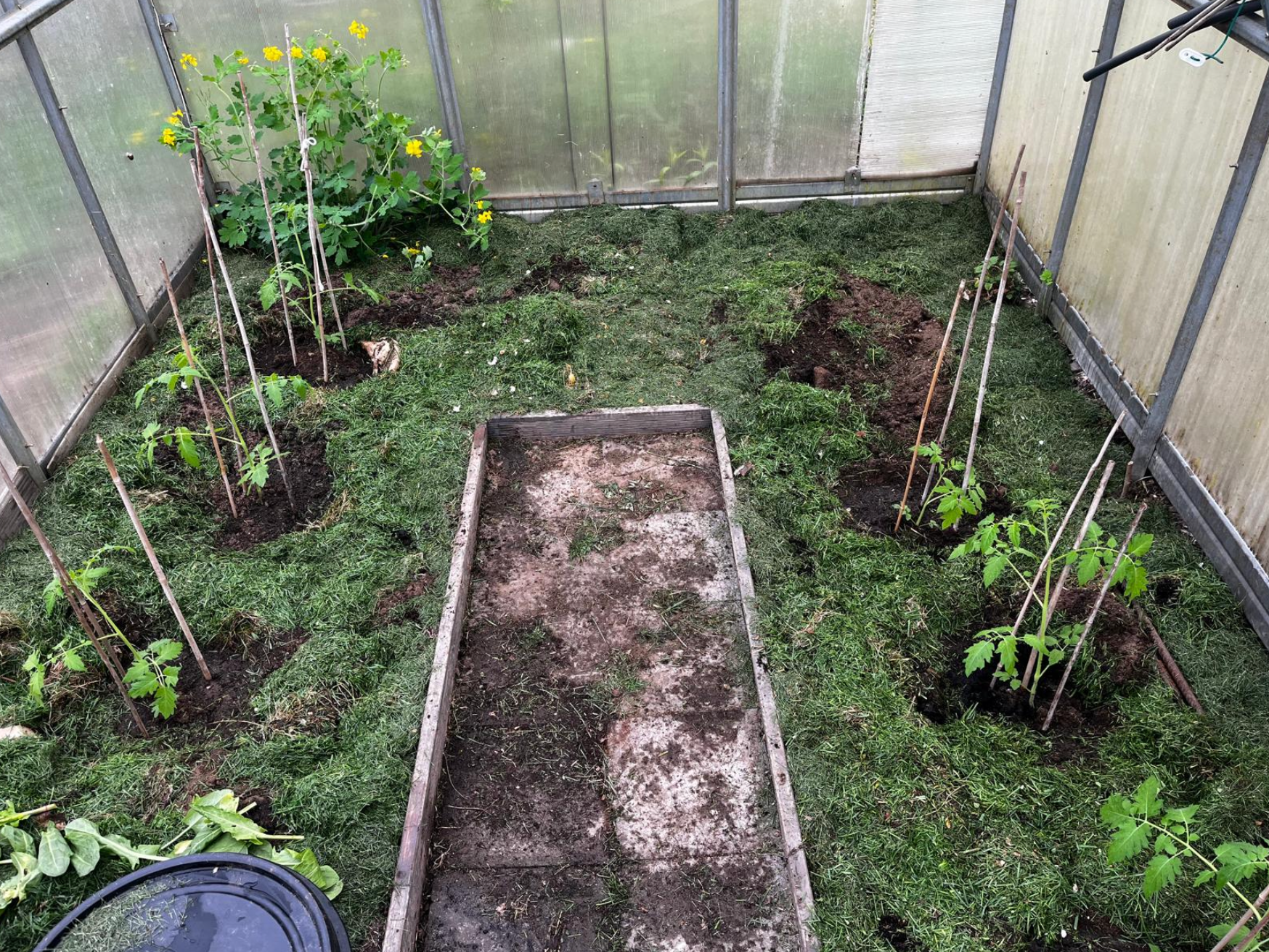
If you’ve read my March To Do List post, you have already seen the less than desirable state of my greenhouse, but it is what it is, so this very green greenhouse will be home for the 6 tomatoes. For now, they are well mulched-around, well watered and some of them have been fertilized with the natural “weed” tea that I have been steeping in the greenhouse (I have one bucket of nettles and one of dandelions). Why some of them? Same reason – experiment. I only fertilized two – one big one and the little one. We’ll see if the tiny dude catches up.