
Living with the Seasons – Foraging in July.
Table of Contents
Learning from those who pay attention…
This winter, reading cozy books written by biologists, activists and authors who seem to be more “in touch” with nature than just the pure “science and numbers” side of it, such as Robin Wall Kimmerer, Nemonte Nenquimo and Robert Macfarlane, I was inspired by their ability to notice, to practice reciprocity and to live with the seasons and with what you have.
It is all too easy for us these days to have whatever we want on any given day. You want a peach in winter in Finland? Sure, we’ll ship you one from Chile.
And this one small fruit salad decision that seems completely insignificant in the grand scheme of things means that a ship-full of peaches will travel from one continent to another, burning fossil fuels, emitting carbon into the atmosphere. To prevent the peach from disease, it will be sprayed with fungicides and insecticides. To prevent it from becoming all bruised and spoiled while it travels, it will be additionally sprayed with post-harvest agents. They say those things won’t affect your health, but they will definitely affect the health of the insects and plants residing under those peach trees.
When you think about the whole trip a single fruit takes from the tree to your table, it makes you wonder if you really need it that badly. Can you still say you are trying your best to contribute to the environment?
A decision…
Plagued by these musings, I decided to take some more time to notice and log things that grow near me every season of the year. Things that may not grow in my garden. Fruit that nature makes available to those who want it, free from chemicals, free from high carbon emissions and, well, free. And this is where you can practice reciprocity, that Robin Wall Kimmerer writes so beautifully about in her book “The Serviceberry” – maybe don’t strip the tree bare and leave some fruit for the birds, bring some water for the tree in times of drought, pick the odd piece of rubbish that litters the floor under the tree.
Living in the northeast of Europe is not like being in an all-abundant growing zone 8, where you have something edible growing at all times. Here, we have all four seasons and in winter, nature is sleeping and you have to be more creative, foraging for something to eat. But, come spring and summer, it changes and all of a sudden you have berries, mushrooms, leaves and roots.
July forage…
Below are some of the things I foraged this July.
Berries.
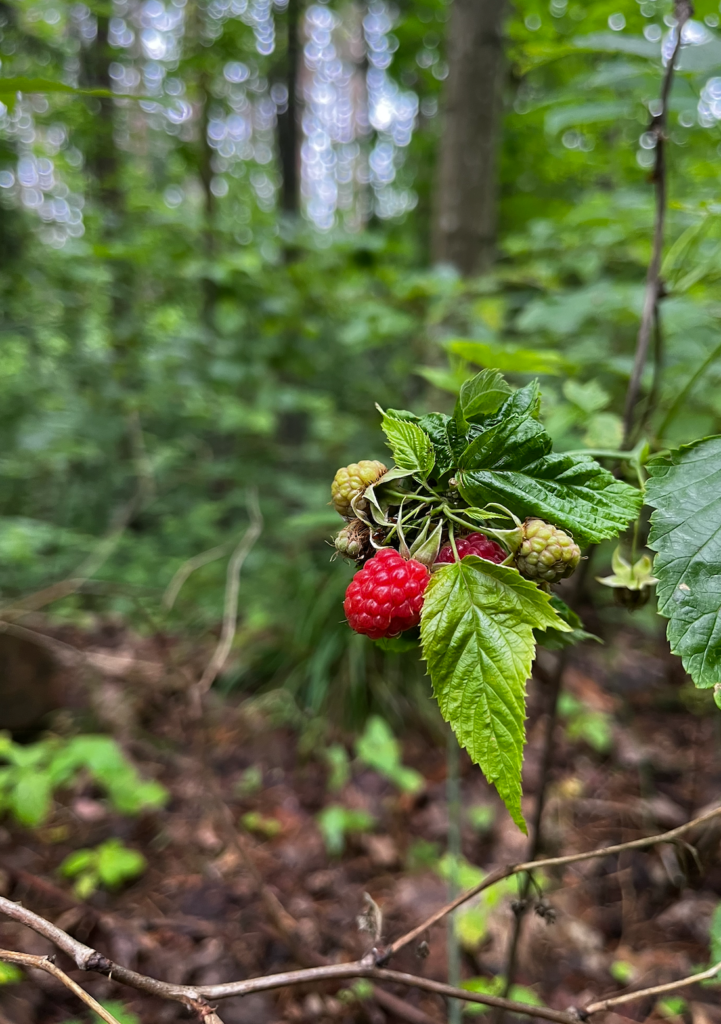
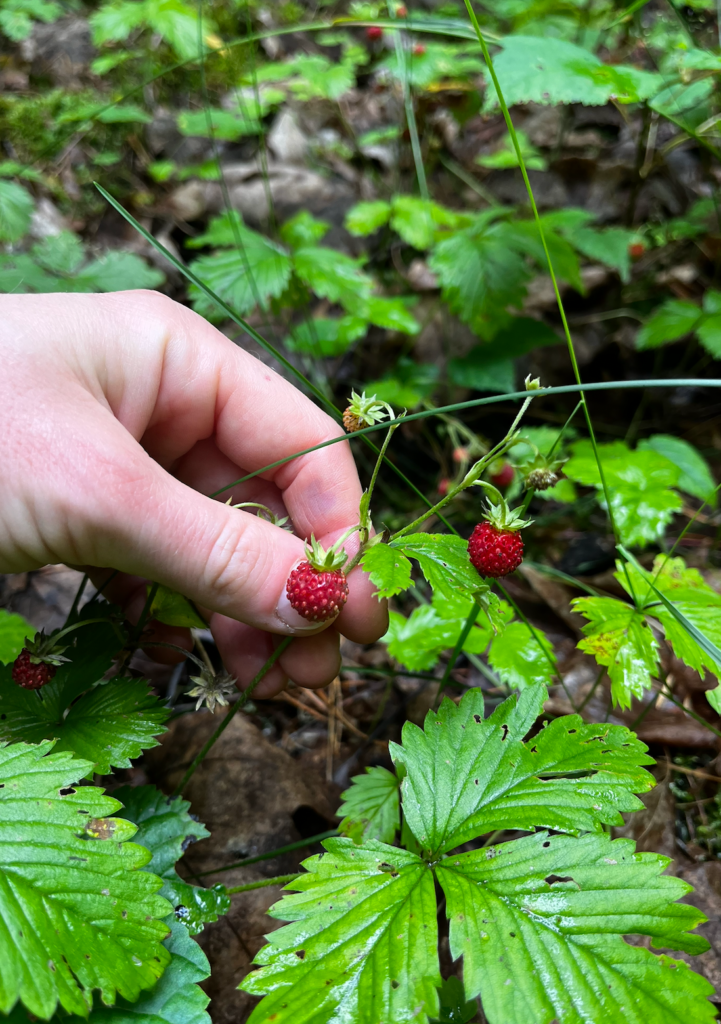
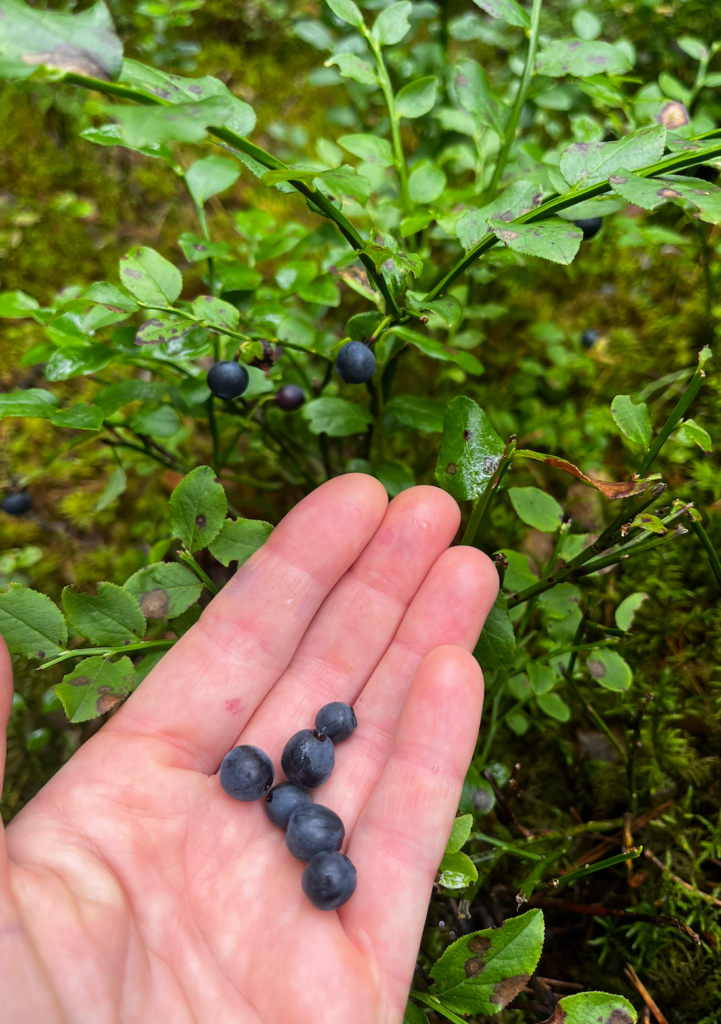
Raspberries, wild strawberries, blueberries.
I have raspberries and wild strawberries growing in my garden, so I only ate some while I was walking, and left the rest to the wildlife and those who don’t have gardens. Blueberries, though, I love, and there were so many this year that you could forage to your soul’s brim.
Normally, blackberries would be ripe too, but this year was too cold for that.
Linden.
Flowers can be dried and used as tea.
I’ve heard people comparing their young leaves to lettuce, but I tried the leaves and maybe my taste buds are too refined, but to me it just tasted like a leaf. Not a lettuce leaf. Just. Leaf.
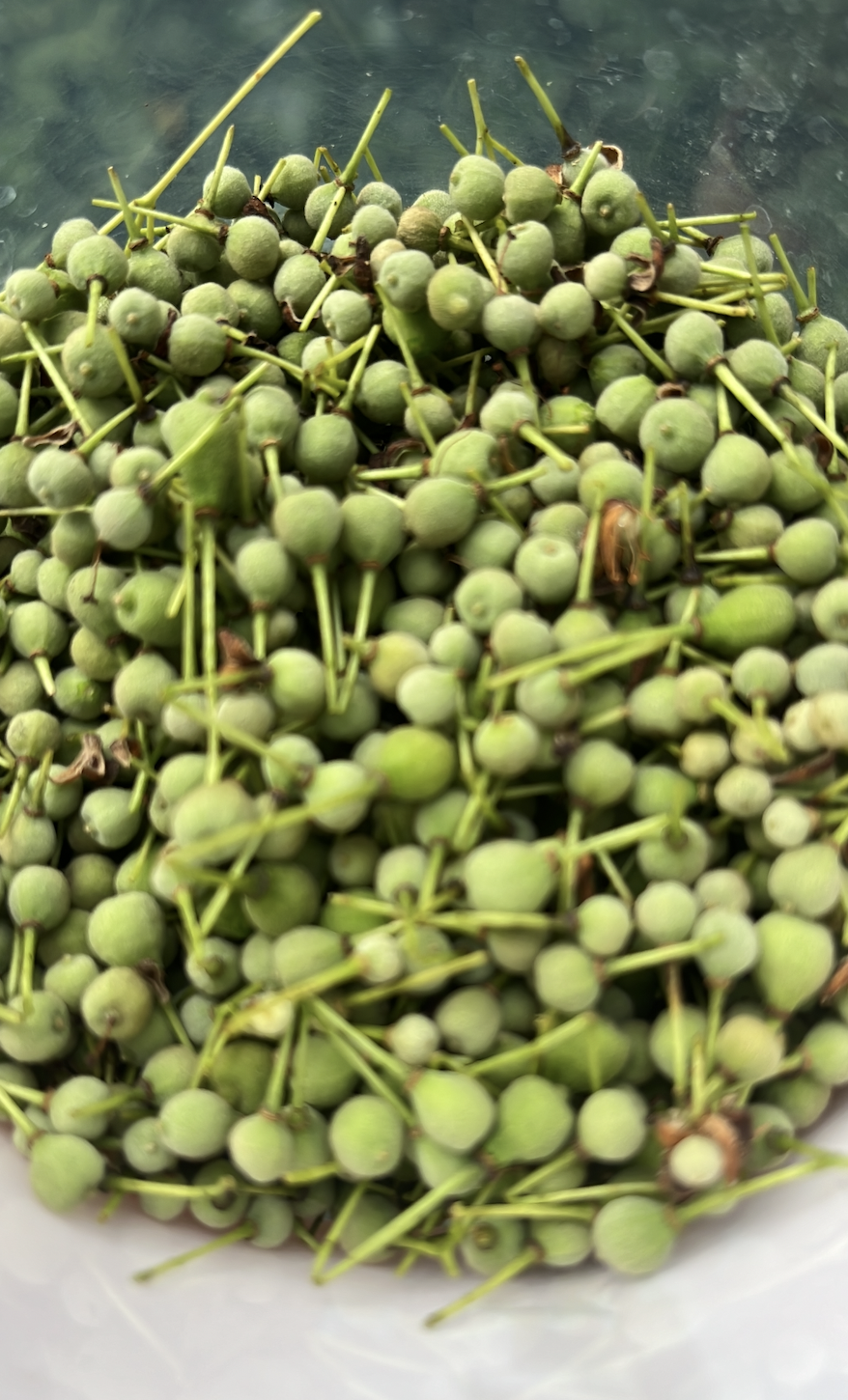
As for the fruit – I have tried making linden chocolate for the first time. You bake the fruit gently, then grind it and mix it with your choice of fat (butter, coconut oil) and your choice of sweetener (sugar, honey, maple syrup). I have mixed it with butter and honey and, well, to me it tasted more like sweetened and pressed coffee grounds instead of chocolate, but it wasn’t bad at all; it tasted more like a power bar. Next time, I will try coconut oil and grinding it into a much finer powder. One thing worth mentioning – it takes ages to pick the fruit needed for a decent amount of choc.
Mushrooms.
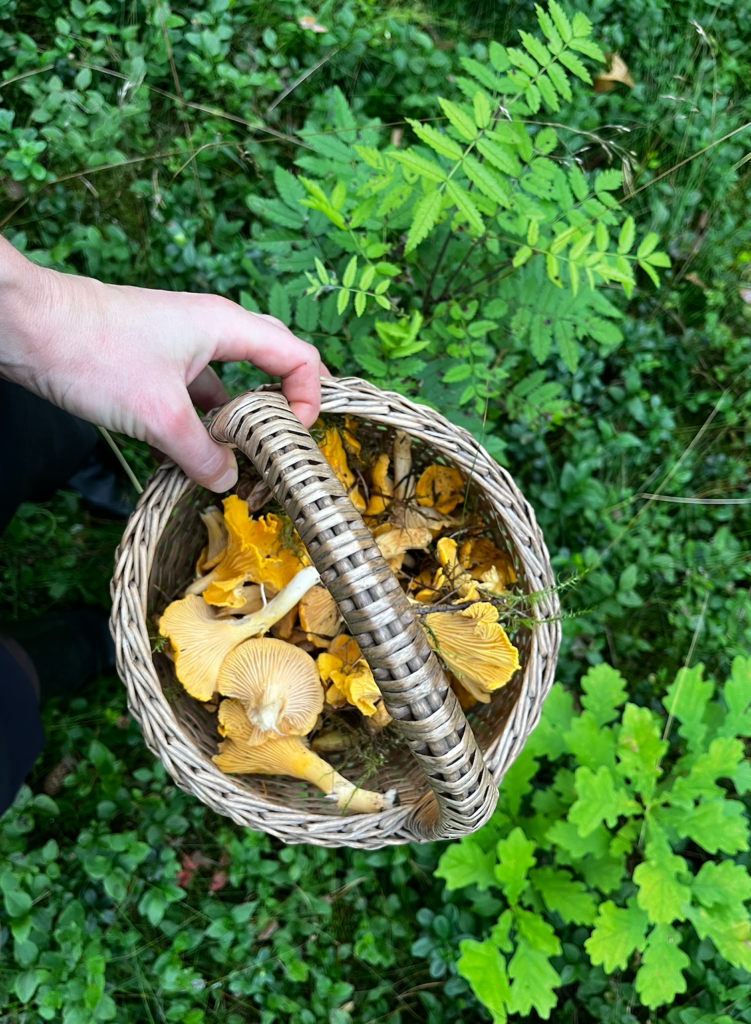
Back in my childhood, mushroom season would normally start sometime at the end of summer. Now, chanterelles start growing as early as July. And me being an avid mushroom picker probably since I could say the word “mushroom”, I was there as soon as they were there. And! Since my aunt’s early summer potatoes were good to harvest, we could enjoy a favorite summer meal – boiled baby potatoes with butter and fried mushrooms and onions, sprinkled with fresh dill.
Resin.
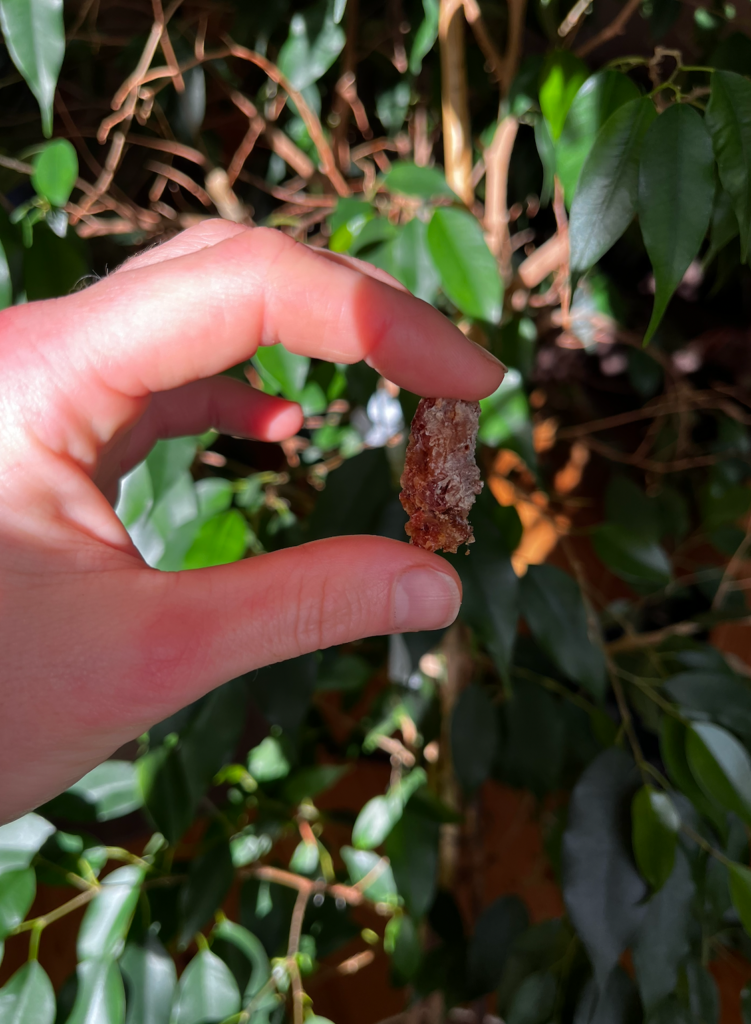
I was working on a site that had a lot of big, easily accessible pines, so every now and then I would pinch a chunk that easily came off.
I was looking forward to sticking it in an incense burner and having my house smell like a pine forest, but I misplaced that thing somewhere. Still looking for it…
Soapwort.
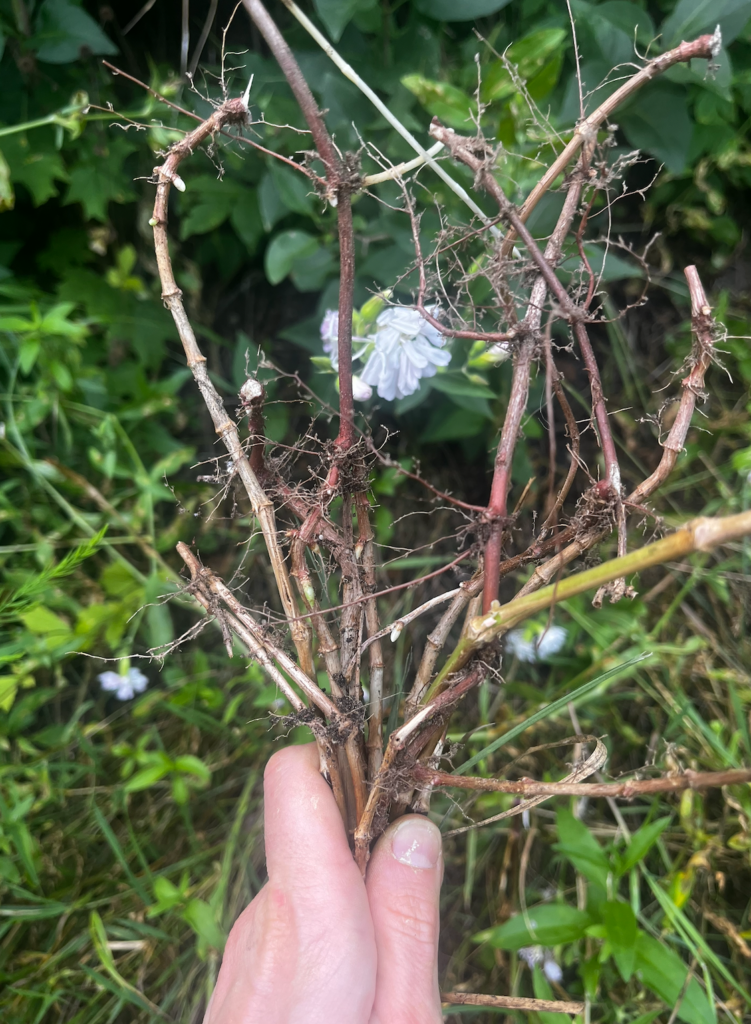
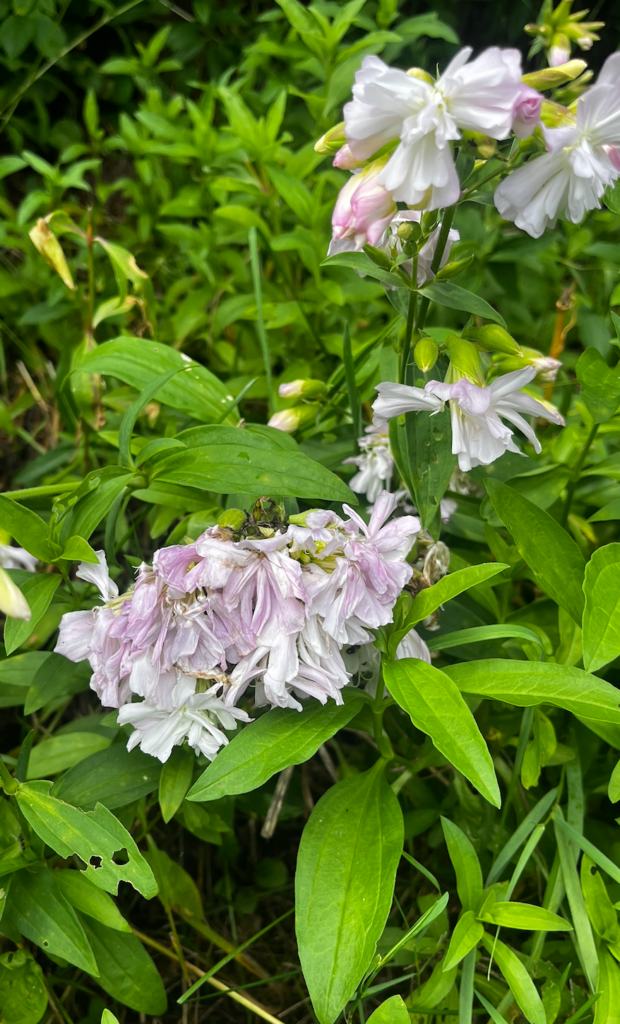
There was this weed growing at the back of my garden. Turns out it’s not just a weed, it’s Saponaria officinalis, a plant that has saponins in it. I went to try just how soapy it would get and wow, that’s more bubbles than I expected. Back in my all-natural shampoo bar-making years, I tested horse chestnut and this was definitely more bubbles than the chestnut.
Mom later mentioned that her grandma said they would dig up the root and do laundry with it. Naturally, I dug out the root and gathered a big bouquet for drying and turning into soap powder. That’s an experiment for the next post.
July was kind of busy with me working 7 days a week, but I will be adding more stuff to this list next year and if you’ve got any exciting foraged treasures to share, drop a comment below!