
Liking Lichen: How Small and Slow Win the Race
Table of Contents
They did slow-living before it was cool.
They are better survivalists than Les Stroud, Bear Grills and Ray Mears rolled into one superhuman.
They’re older than the oldest relative 23andMe could ever dig up in your family tree.
When was the last time you looked at lichen?
Well, you really should. They’re beautiful. And not just that. So strap in and get enlichened!
I started being lichen-obsessed (or maybe just lichen-inclined) after reading a book by Merlin Sheldrake, Entangled Life. Before that, when in the forest, I used to mostly look up at the trees, but after reading that book, followed by Robin Wall Kimmerer’s Gathering Moss and others, my gaze suddenly turned downward and closer up to those tree branches.
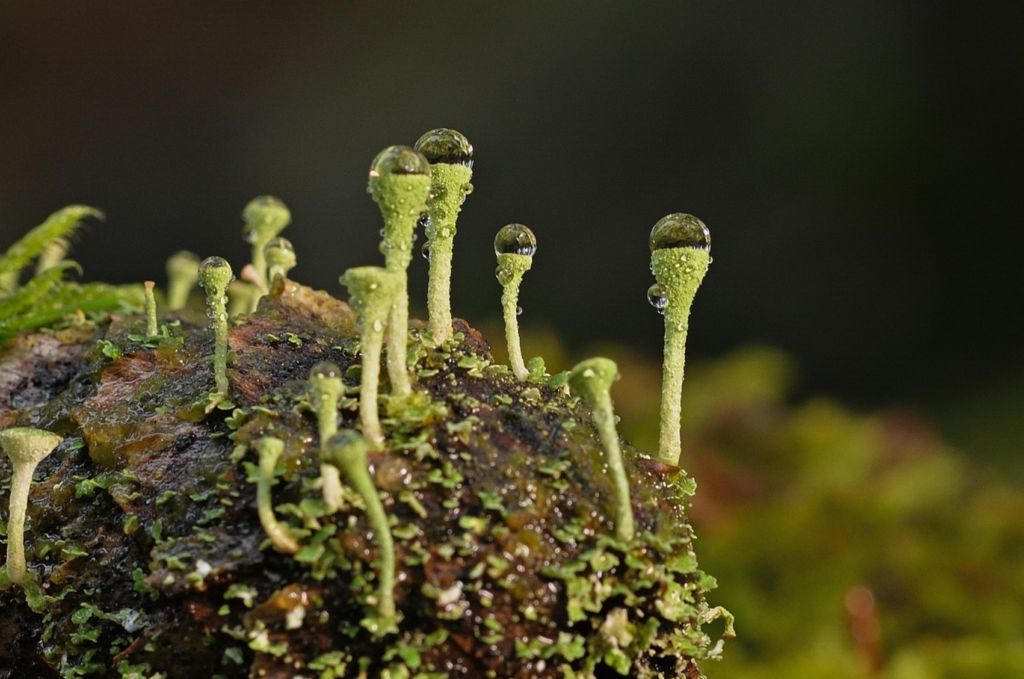
What are Lichens?
Lichens aren’t a single organism. They are a symbiosis between fungi and cyanobacteria or algae (and sometimes bacteria as a third roommate). The fungus provides the housing, the algae produce food by photosynthesising, and the third roommate boosts nutrient recycling.
They are usually classified either by their appearance:
- Crustose – flat and crusty, stuck to rocks or walls
- Foliose – leafy, kind of like peeling paint
- Fruticose – bushy or stringy, sometimes hanging from trees like tiny beards
or by the habitat they live on:
- Corticolous – growing on the bark of living trees
- Lignicolous – growing on wood, mostly deadwood
- Saxicolous – growing on rocks
- Terricolous – growing on soil
Why are lichens so awesome?
Wildly old
There are debates and some evidence that algae lived around 400 million years ago. Those are still to be proven, but this guy, called Daohugouthallus ciliiferus, certainly lived 165 million years ago, which I think is pretty impressive.
The oldest known species of algae that still lives is called Rhizocarpon geographicum, and some individuals are estimated to be up to 4,000 years old.
Can you imagine spending 4,000 years just chilling on a rock?
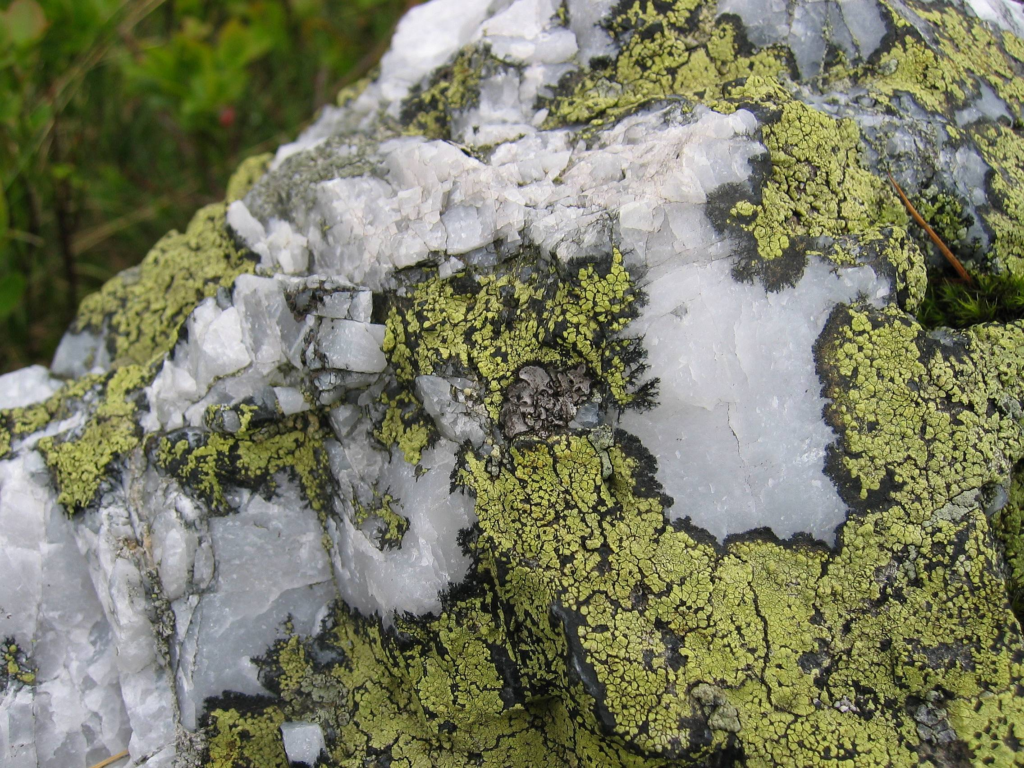
Incredibly slow growers
I suppose if you’re going to live 4,000 years, you’re not really in a rush to grow, because most lichens grow very slowly—often just a few millimetres per year.
BUT
They are exceptionally tough and strong survivors
Merlin Sheldrake mentions an exciting experiment by the European Space Agency in which a group of scientists sent lichens into orbit on a Soyuz rocket, where they were subjected to harsh space conditions of vacuum, cosmic radiation, and wild temperature swings. The spacecraft returned to Earth with the lichens perfectly fine. They simply went dormant while in space and, once returned to their normal conditions, continued their lichen business.
Due to their high tolerance of stress, they are often one of the first organisms to appear on disturbed soil and play an important role in soil formation.
They sense the pollution
Lichens are indicators of clean air. They don’t grow well in polluted places, so if you have lots of lichens where you live, consider yourself lucky.
They glow!
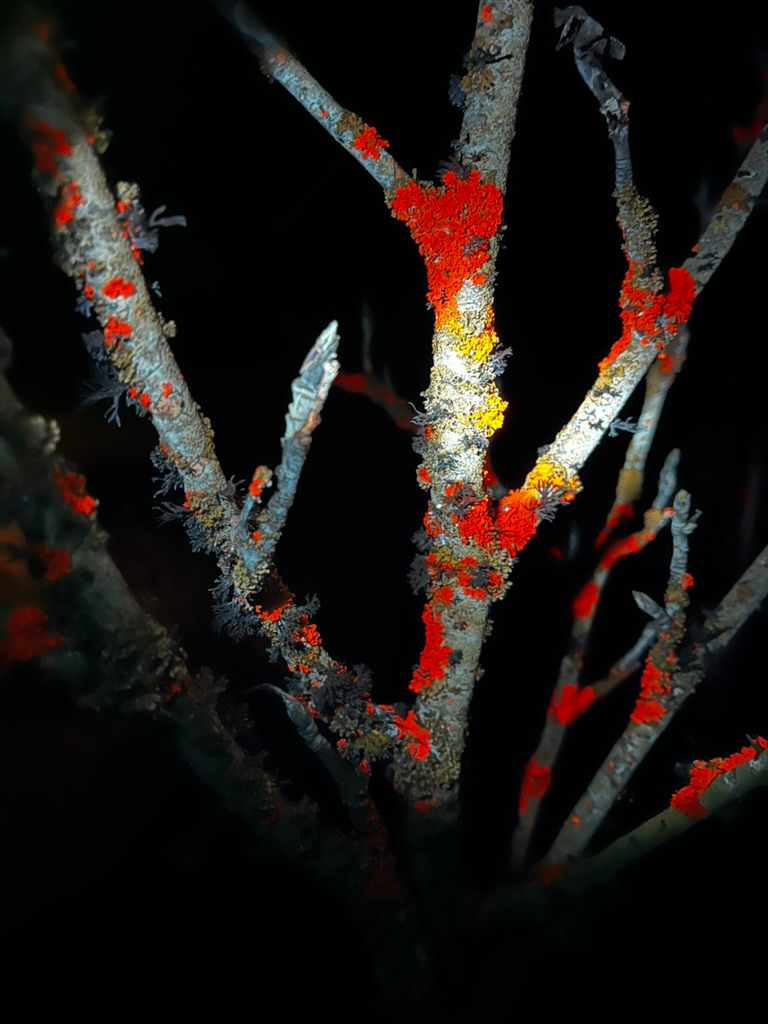
I like glowing things. Naturally, I researched whether there are species of glowing lichen, and lo and behold—there are! Well, not bioluminescent. They won’t glow in the dark like the bioluminescent algae you can sometimes see in the oceans. But if you hit them with UV light, there are some that emit a bright glow.
Of course, now I had to purchase a UV light torch and go explore in the garden.
Here’s the result.
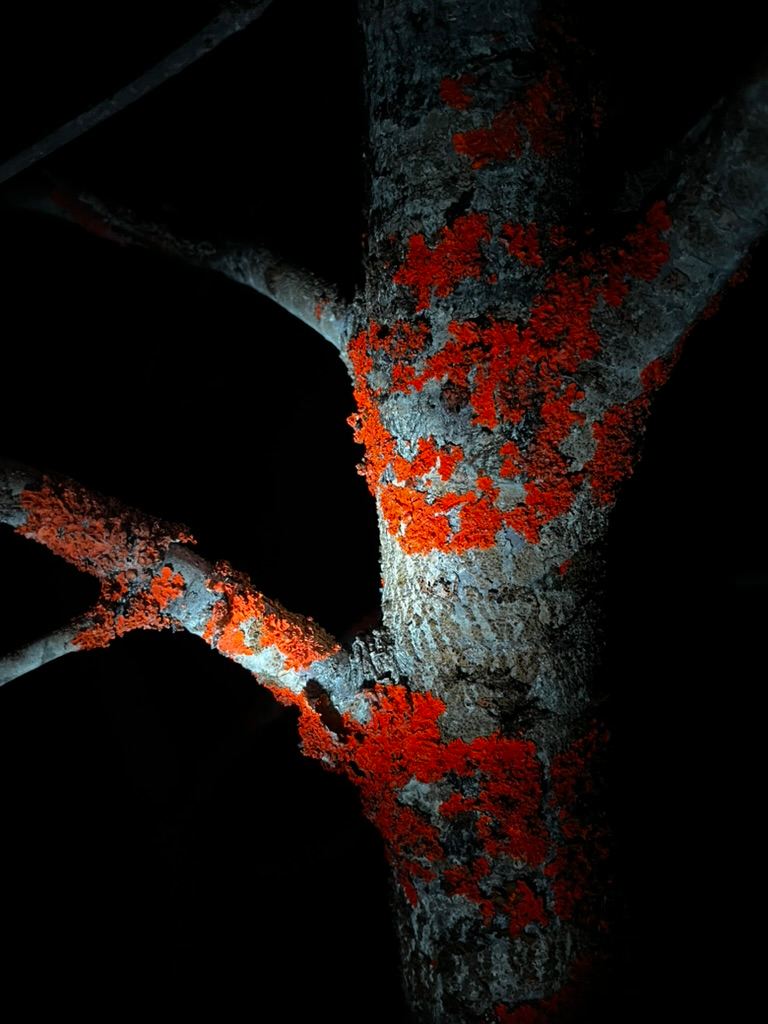
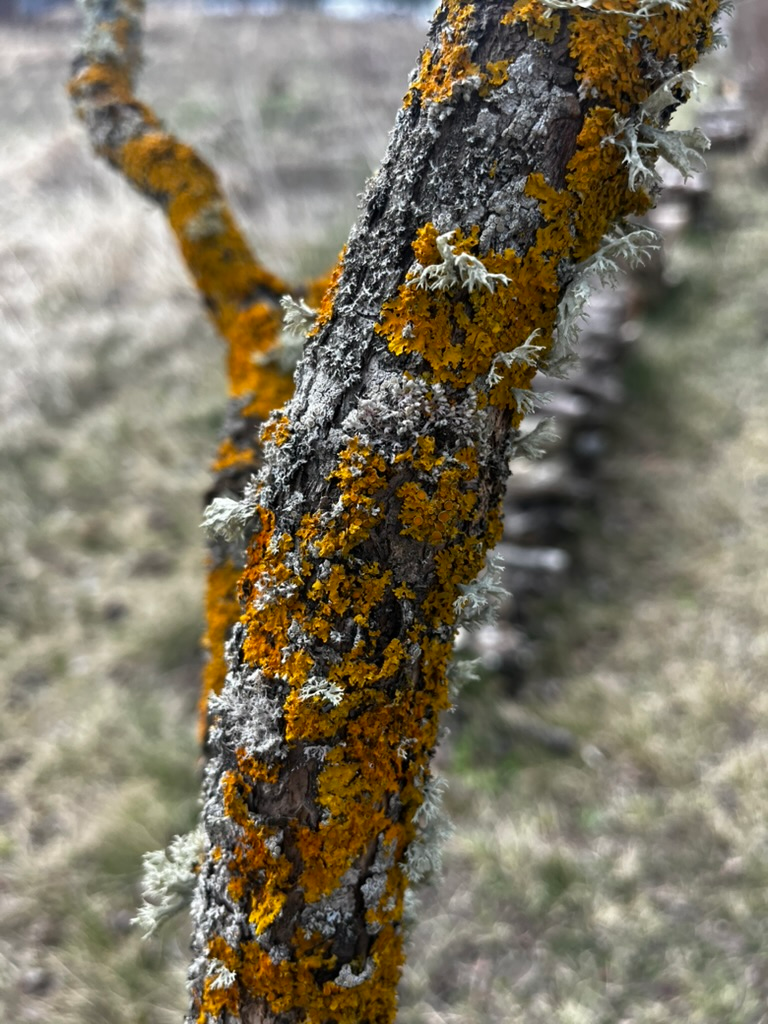
This is Xanthoria parietina that I found on lilac, apple trees, and rowan trees, as well as many rocks.
This is what it looks in daylight compared with night time in UV light.
So if you live in a country where winters are long and dark, grab a UV light and go explore your backyard!
Happy enlichenement!