
Starting Your First Garden: Main Things to Consider
Sun charts, landscaping, soil, bugs, companion planting, tools—it can all be very overwhelming.
Whatever your reason for starting a garden—food, flowers, just a nice place to unwind—this is going to be a dirt-simple guide to help you not drown in the sea of information.
Here I want to go over some basic and main things to consider when you want to start a garden.
I feel like these are the most important rules to follow when you start (or before you do) to prevent major mistakes, and the rest can be learned as you go.
I’ll jump right into it and link to other pages for more detail as I go.
Table of Contents
START BY OBSERVING YOUR GARDEN
If you have time, spend it not doing anything. Observe. Notice how the seasons change things on your plot of land. Where sunny spots are, which corners are in permanent shadow. Maybe there’s a place where all rain likes to gather, a favorite deer spot, an unusually dry hill.
You can draw a sun chart. Note how water moves.
You can, of course, change all of that—with money, some heavy machinery, and landscaping, you can create whatever you want. Or, you can just roll with nature and work with what you have. I’m a strong believer that if you work with nature, you can accomplish way more with loads less resistance.
SKETCH YOUR DREAM
Take a piece of paper and, using all the information you observed, draw what you’d like your garden to look like. At least a rough plan.
Here is an example I made of my garden a while ago.

The reason? Well, just so you don’t build a greenhouse somewhere you later decide you’d like to dig a pond. Not saying you won’t be able to change that, but it’s just a bit of a waste of time.
You don’t need to know everything. You also reeeeeally don’t need to do everything right away, but you probably already have some sort of vision for the plot of land. Draw it.
It’s lucky if you have a plot of empty land—that’s like a canvas for your imagination. My garden was already there. There were trees, some bushes, structures, and ugly buildings in neighboring plots that needed hiding. I knew I wanted to change the direction of the greenhouse so it partially covered the ugly building, so I did not plant anything around it until I had time to turn it around.
Sketch structures and big things first—stuff like buildings, gazebos, garden beds. You can decide on plants much later.
FIND OUT BASIC FACTS ABOUT YOUR GARDEN
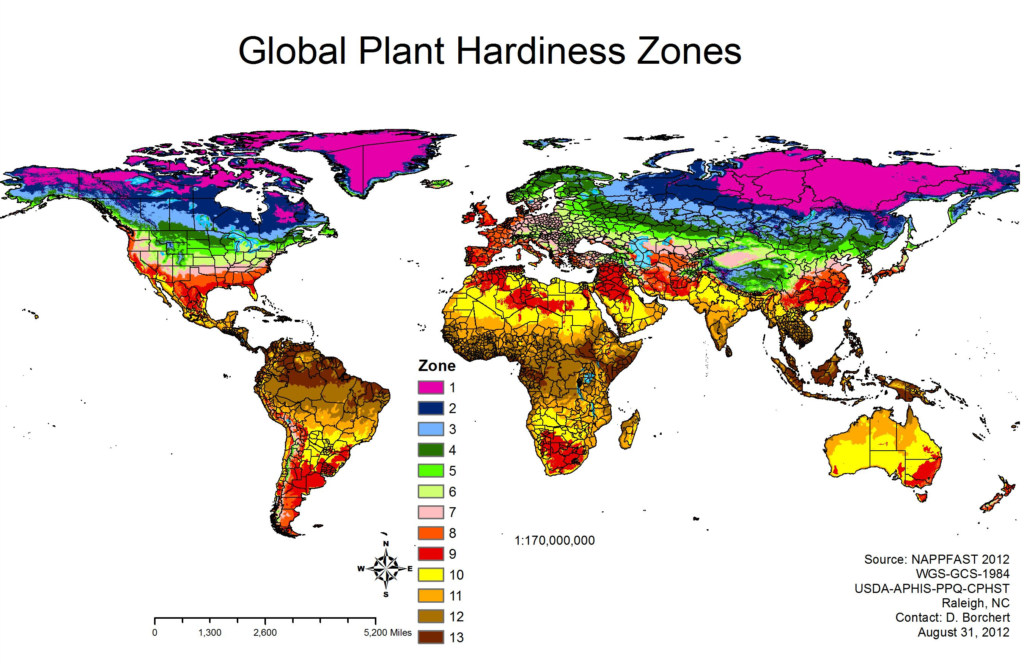
Know what USDA zone you are in.
Basically, the world is divided into growing zones, and knowing which zone you are in will massively help with research about plants. Tropical plants will not grow well in Northern Canada.
Annuals, perennials, biennials. Some plants you plant once and they keep reappearing each year—that’s perennials. Annuals only grow one season and you have to keep replanting each year. Biennials grow over two seasons. Some plants are perennials in some USDA zones but can only be grown as annuals in others. For example, a pepper (Capsicum) will grow year after year in zones 9–11, but in zone 5 it will be killed by frost.
Here is the world map. And here is a more detailed one if you are in the US.
Know your soil.
There are a bunch of “home” tests you can do to find out what soil you have. Here is a super quick guide how to test your soil using just a jar and a drop of dishwashing liquid.. Knowing soil pH is also beneficial, because some plants (like pines) like acidic soil, and others (like asparagus) prefer alkaline. The thing is—all soil can be improved with compost. Eventually, you will learn how to.
THE MOST IMPORTANT RULE
I feel like no one ever mentions it. Everyone always says “soil.” Nope, it’s not soil. And I know that because I’ve inherited a garden where this most important rule was not observed. The rule is: DO NOT PLANT INVASIVE OR EASILY SPREADING PLANTS.
Or rather, if you do want to plant an aggressive (not invasive) plant, consider containers or be mindful of their spreading abilities.
You will spend so much effort trying (and mostly failing) to banish those plants from your garden and keep them from destroying your other crops.
Each year I am waging battles with a buckthorn that lives outside my garden and keeps coming in. It doesn’t produce berries. It just produces extremely motivated shoots. Shoot after shoot, it tries to colonize the space around my compost bin, and shoot after shoot I destroy it.
First of all, I don’t know about where you live, but I’m sure that in most countries planting invasive plants is against the law and could bring fines. Secondly, plants are alive—they, just like humans, can prefer one environment to another. A plant that’s not invasive in China might be totally destructive in the US.
Always research before you plant. Don’t simply search if your plant is invasive. Some may not be considered invasive but can behave “aggressively,” which means they aren’t prohibited but will overpower your garden. A simple example is mint. Some mint is so crazy that if you plant it not in a container but in your raised garden bed, in a year or two there will be nothing in that garden bed besides mint.
START SMALL
Starting your first garden shouldn’t feel overwhelming.
Start with a practice garden bed. Pick what you want to grow and try it. You’ll make mistakes in the beginning. There are going to be things you didn’t even think about. It’s easier to fix all of that on a smaller scale.
Imagine you made 10 garden beds, planted 5 trees, and sown flowers just to realize your soil isn’t all that great, or all your plants struggle, or some plants don’t like the conditions or the buddies that grow near them. All your effort will seem in vain.
Also, what if pests attack? You need to prune something, protect something from slugs. That will require additional funds you may not have planned for. Having a thousand things to do, buy, and fix can quickly turn into a nightmare.
It’s much better to start with a single or a couple of things and slowly adjust to what works best. Start a mini herb garden, a small veg bed, maybe a couple of pots instead of a garden bed, one or two trees. Maybe start a couple of small permaculture guilds, where multiple plants can grow in harmony. Pick what suits you.
DIVERSITY OF PLANTS MATTERS
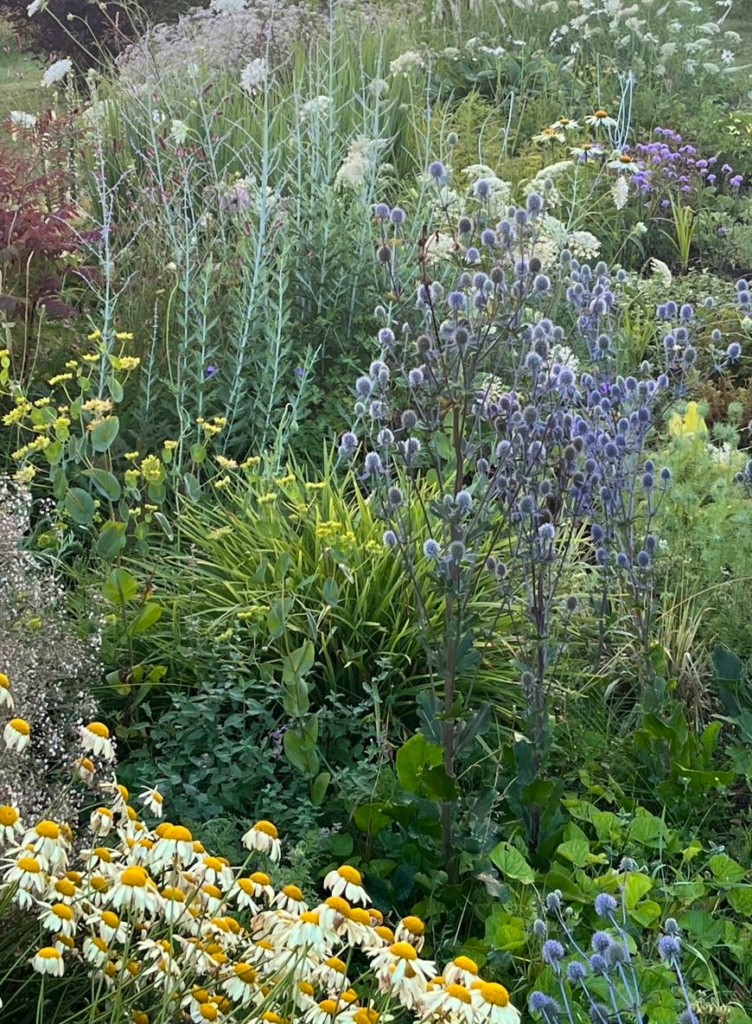
Look at a forest or at a meadow. Notice how many things live in it. How many different trees, weeds, flowers. Diversity is the secret to thriving. Same is with gardening.
Tidy rows of monocultures will have a harder time surviving than a garden with multiple species of plants. Imagine you only plant kale. Here comes an aphid, a pretty persistent bug, finds this accessible, unprotected kale paradise. What do you think it will do? Devour it, of course. And your hopes of having an organic, chemical-free garden get either covered in neem oil or whatever more-or-less organic solution you can find, or fall to the hungry aphid.
If, however, along your kale you plant some nasturtium (aphids might prefer to eat that), or dill that will attract ladybugs (who like to eat aphids), you will have more chance of growing your kale for yourself rather than for the bugs. Strength in numbers, they say. Plants are like people—each has a set of strengths and weaknesses. A community of different strengths is a community with a superpower to withstand anything.
Plant some flowers that bloom early in spring to attract pollinators. Plant some herbs with scents that repel bugs. Add a plant or two that fix nitrogen and improve the soil. Include something that will feed the birds, who will eat the slugs. Work with nature, not against it.
If you want to read more on diversity, you can jump here.
KEEP A GARDENING JOURNAL
With the little garden bed, trees, or flower bed you have, make a little to-do list for the whole year, so you remember what to do when.
As you research the plants you want to have, see what important things you have to do throughout the year so the plants keep growing:
- When to plant the plants you have chosen
- When to prune or stake
- When and if to cover
- What to do before winter (cut or not, cover or not, etc.)
Now you have an overview of your yearly tasks.
Once you know the whole process, you can increase the amount you grow if you feel comfortable with it.
Keep a gardening journal as you go along – when and what was planted, what failed or grew really well, all the things you would like to remember next year.
You can browse Etsy for digital printables and planners, like this or similar, but honestly, you can just log everything on paper. I do advise logging stuff, because you really won’t remember what kind of potato variety you planted last year.
That’s it, those are my suggestions for a beginner gardener to consider before they start putting seeds in the ground.
No matter what you do or don’t do – it’s never going to be perfect, and that’s fine, enjoy the process!
Happy gardening!